Get Your Free Operations Readiness Blueprint
This operations readiness blueprint shows you exactly how VR training reduces $50K–$100K per month in preventable workforce costs. You'll see the 6 problems VR solves, industry-specific use cases, ROI projections, and a recommended pilot approach—all customized for your operations.
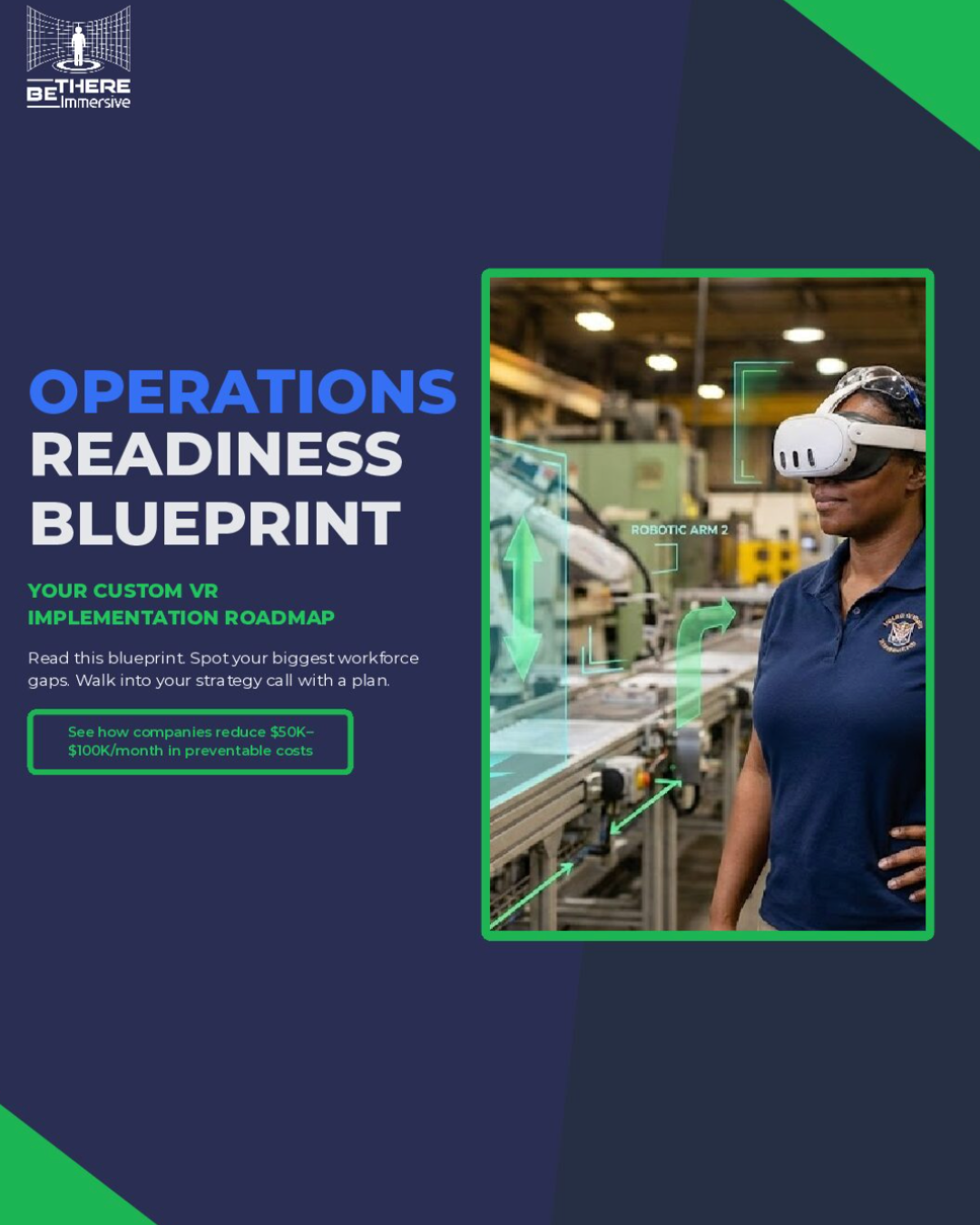
VR Training Delivers Measurable Results
PwC's enterprise study on immersive learning proves VR isn't incremental improvement—it's a fundamentally different way to prepare people.
The 6 Workforce Problems Breaking Ops Performance
Your operations are absorbing costs you've accepted as "normal." Turnover. Incidents. Rework. Inconsistency. They add up to $50K–$100K per month in preventable losses. This operations readiness blueprint shows you exactly where VR fixes each one.
Field Readiness Gap
Workers arrive on day one mentally and visually unprepared for what they're about to face. The pace overwhelms them. Hazards they've never visualized suddenly become real.
Safety Mindset Drift
New workers don't develop true hazard recognition until they've experienced close calls—and by then, it's too late. Slide decks can't teach what immersive experience can.
Onboarding Variability
Every superintendent trains differently. Site-to-site inconsistency means new hires never get the same message, clarity, or preparation. 36% of companies have no structured onboarding at all.
90-Day Retention Cliff
Workers quit in their first 90 days because "it's not what I expected." When expectations don't match reality, early turnover becomes inevitable. One-third of new hires leave within 90 days.
Culture & Belonging Gap
Workers feel disconnected before they ever meet the team. Gallup shows only 12% of employees strongly agree their organization does a great job onboarding—88% start feeling like outsiders.
Regional Inconsistency
Every site becomes its own version of the company. When you can't guarantee a new hire in Phoenix gets the same preparation as one in Pittsburgh, you can't scale.
Ready to see how VR solves these problems?
The operations readiness blueprint maps each problem to specific VR solutions with ROI projections and a recommended pilot approach.
What's Inside the Operations Readiness Blueprint
This isn't a generic whitepaper. The operations readiness blueprint is your customized roadmap for deploying VR training that delivers measurable operational results.
Priority Use Cases for Your Industry
Construction or manufacturing—specific VR applications mapped to your operational environment.
Safety Mindset Improvements
How VR trains hazard recognition through experience—mapped to your incident data patterns.
Consistency Mapping
How to unify training across sites, shifts, and regions for enterprise-wide standardization.
ROI Projections & Pilot Plan
Ops impact opportunities ranked by ROI potential, plus a rollout plan for 1–2 pilot locations with measurable KPIs.
Recommended VR Scenes
Day-one clarity moments tailored to your environment that reduce supervisor burden immediately.
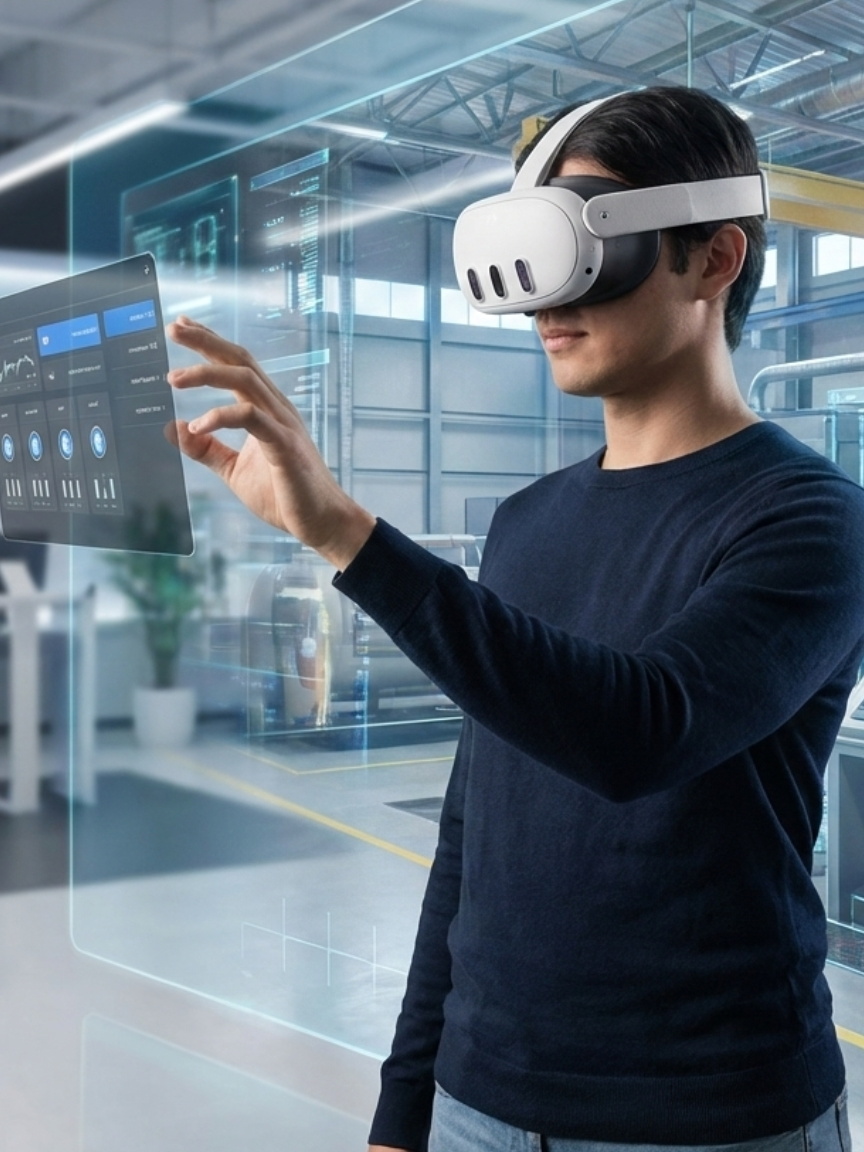
Where VR Impacts Ops Immediately
VR shows what words cannot describe. The operations readiness blueprint includes specific use cases for your industry.
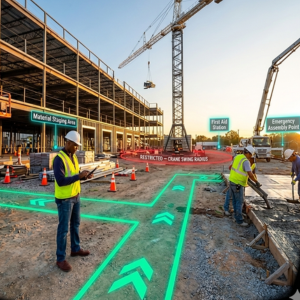
Construction
Show the full site layout, traffic patterns, and work zones before arrival.
Train on heavy equipment movement, blind spots, and danger areas.
Practice high-risk tasks in safe, repeatable VR environments.
Experience the speed and intensity of live operations.
VR shows what words cannot describe. Workers arrive field-ready.
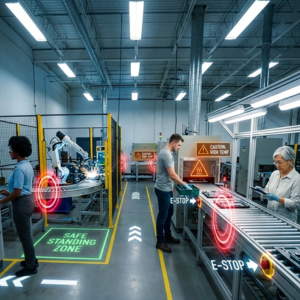
Manufacturing
See the real pace, workflow, and line speed before day one.
Experience the sensory intensity of plant environments.
Identify hazards around moving machinery through immersive training.
Understand equipment movement and pedestrian safety.
VR prepares operators for the reality of the line—before day one.
You're Already Paying for This
One early exit. One safety incident. A few weeks of supervisor time spent retraining instead of leading. Together, they quietly drain $50K–$100K+ per month from your operation. VR isn't an added expense—it's a reallocation.
"BeThere Immersive is building something truly special. Their VR platform is one of the most innovative tools we've seen in workforce development, and our experience partnering with them has been outstanding. We're excited to use their innovative tools to elevate recruiting, streamline onboarding, and strengthen safety training across our teams."— Mark Schell, Vice President, Diamond Pet Foods

Operations Readiness Blueprint: Common Questions
Answers to the questions operations leaders ask before downloading.
Yes. PwC's enterprise study found VR learners trained 4× faster and were 275% more confident to act on what they learned. For operations, this translates directly: workers who experience realistic job previews before day one arrive with accurate expectations (reducing early turnover) and developed hazard recognition (reducing incidents). Diamond Pet Foods and other enterprise partners are already deploying these solutions across their operations.
You don't need VR expertise. BeThere Immersive handles the technical complexity—360° video capture, scene development, and platform deployment. Your team focuses on identifying which operational scenarios matter most. The blueprint includes a pilot plan that starts with 1–2 locations so you can validate results before scaling, and our team manages the implementation end-to-end.
The blueprint includes ROI projections mapped to your specific workforce costs—turnover, safety incidents, supervisor retraining time. When you show leadership that you're already spending $50K–$100K per month on these preventable problems, VR becomes a reallocation of existing spend, not a new budget line. The typical payback window is 60–90 days, which makes the business case straightforward.
Traditional video is passive—workers watch without engagement. VR is experiential—workers look around, make decisions, and develop spatial awareness of hazards they'll encounter on day one. Research shows VR learners are 3.75× more emotionally engaged than classroom or video learners. That engagement translates to retention, both of information and of employees.
Most operations teams move from blueprint to live pilot in 4–6 weeks. The blueprint itself gives you the framework to identify priority use cases and build an internal business case. From there, BeThere Immersive handles content development—including on-site 360° capture—and delivers deployment-ready VR experiences. You don't need to slow down current operations to get started.
The blueprint includes specific KPIs to track: 90-day retention rates, time-to-productivity, safety incident frequency, and supervisor hours spent on retraining. You'll establish baselines before the pilot and measure against them during and after. Because the metrics tie directly to operational costs, you'll see the impact in both workforce performance and your P&L.
Download the Operations Readiness Blueprint
This is a free implementation roadmap. No fluff. Just a clear picture of what VR fixes, what it costs, and what you'd pilot first to stop preventable ops losses.